Picture this. A potential customer opens ChatGPT, Perplexity, or Google’s AI Overviews and asks, “What’s the best solution for my problem?” Within seconds, they get a confident, tidy answer that names three or four brands. Yours isn’t one of them. There’s no click, no visit, and no chance to compete.
Welcome to the new search landscape. AI engines no longer just list links; they summarize, recommend, and cite. The good news is that websites built the right way can earn those citations, and the practice of doing it is called Generative Engine Optimization, or GEO. This checklist shows you exactly where your site stands and what to fix first.
What Is GEO, and Why Should You Care?
GEO is the practice of optimizing your content so AI-powered search tools can understand it, trust it, and cite it in their answers. If traditional SEO is about earning a spot on the shelf, GEO is about earning a recommendation from the shopkeeper who talks to every customer who walks in.
Here is why it matters right now:
- More people are using AI assistants for research, comparisons, and buying decisions.
- AI answers often satisfy the question without a click, so being cited is the new visibility.
- Visitors who do click through from an AI citation tend to arrive already informed and ready to act.
GEO doesn’t replace SEO. It builds on it. Many AI tools draw on search indexes, so strong SEO fundamentals still feed your AI visibility.
How AI Search Decides Who to Cite
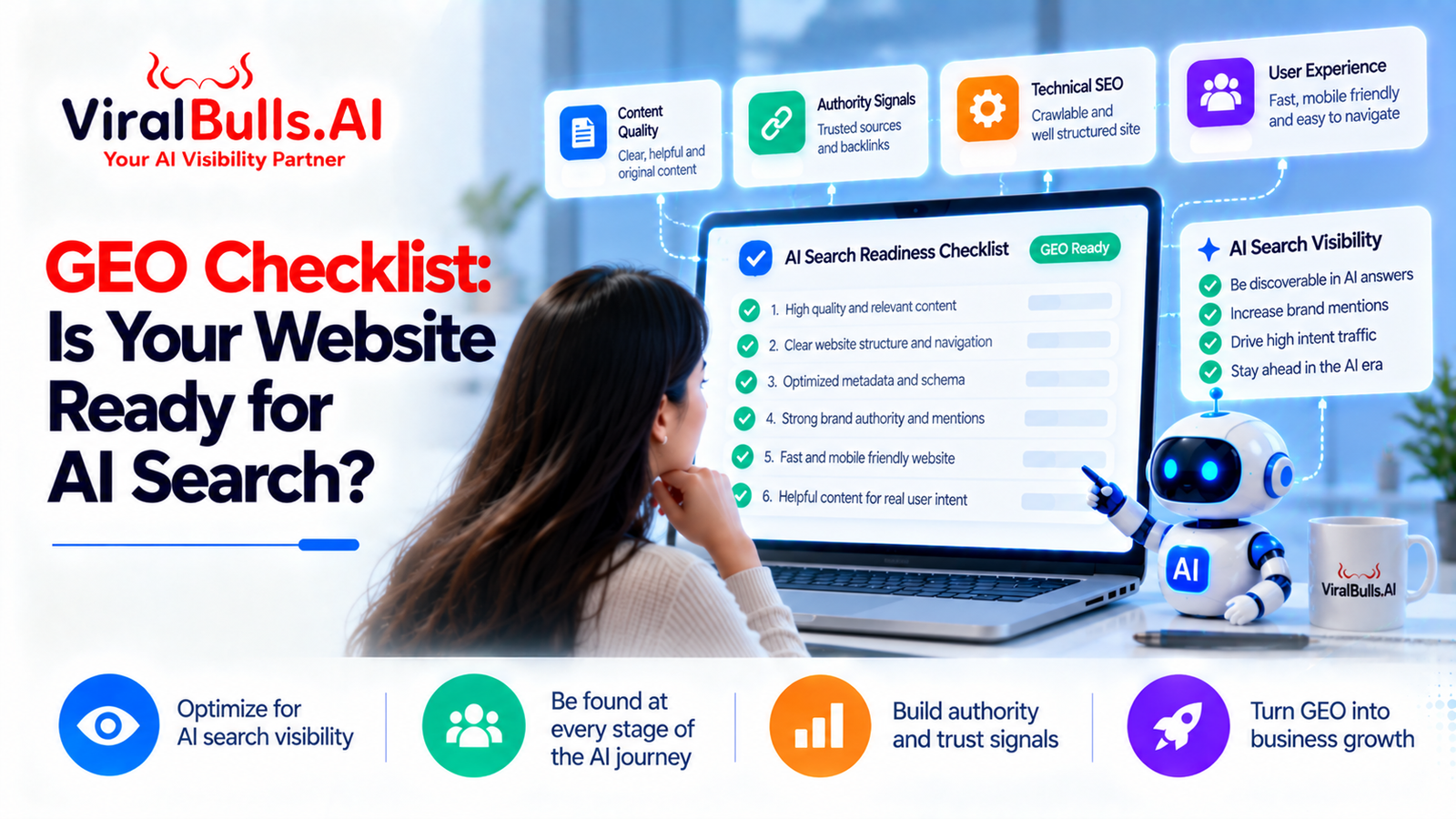
AI systems favor content that is easy to extract, clearly authoritative, and consistent across the web. In practice, they are asking three questions: Can I access this site? Can I understand what it’s about? Do I have reason to trust it? The ten checklist items below are organized around those questions, so you can move from access to clarity to credibility.
The GEO Checklist: 10 Things to Check on Your Website
1. Lead with the answer
AI models pull concise, self-contained passages. Open each section with a direct two-to-three-sentence answer, then expand with detail, examples, and context. If a reader (or a machine) can lift your first paragraph and it still makes sense on its own, you’re on the right track.
2. Use question-based headings
People talk to AI in full sentences, so mirror that. Headings such as “How much does X cost?” or “What is the difference between X and Y?” match real prompts and make your content easy to match to a query.
3. Demonstrate real expertise (E-E-A-T)
Experience, expertise, authoritativeness, and trustworthiness matter more than ever. Add named authors with short bios, cite reputable sources, and include original insights such as case studies, first-party data, or expert quotes. Generic content that repeats what everyone else says gives an AI no reason to choose you.
4. Add structured data (schema markup)
Schema markup is a behind-the-scenes label that tells machines what your content is. Implement Organization, Article, FAQPage, Product, and Review schema where relevant, and validate it with Google’s Rich Results Test. Structured data removes guesswork, and less guesswork means more accurate citations.
5. Make sure AI crawlers can reach you
This is the most overlooked item on the list. Check your robots.txt file and security settings to confirm you aren’t accidentally blocking AI-related crawlers, such as GPTBot, PerplexityBot, or Google-Extended, if you want to appear in those tools. If you can’t be crawled, you can’t be cited.
6. Fix your technical foundations
AI tools rely on the same technical signals search engines do. Make sure your pages load quickly, work well on mobile, use clean HTML, and display key content in the page source rather than hiding it behind heavy JavaScript. Keep your XML sitemap current and your internal links logical so every important page is easy to find.
7. Build a clear brand entity
AI needs to know exactly who you are. Keep your business name, description, address, and social profiles consistent everywhere. Create a thorough About page, link your official profiles using schema, and describe what you do in plain language. The clearer your identity, the more confidently an AI can associate you with your topic.
8. Earn mentions beyond your own website
AI models learn from the wider web, not just your domain. Brand mentions in industry publications, review platforms, directories, podcasts, LinkedIn, and community discussions all strengthen your credibility. Digital PR, guest contributions, and genuine customer reviews are no longer just nice extras; they are core GEO tactics.
9. Keep content fresh
Outdated pages lose trust. Review your top-performing content at least quarterly, update statistics, refresh examples, and show a visible “last updated” date. Fresh, accurate content is more likely to be treated as a reliable source, especially on fast-moving topics.
10. Measure your AI visibility
You can’t improve what you don’t track. Test a list of your target prompts across ChatGPT, Perplexity, Gemini, and Google’s AI Overviews each month. Note whether your brand is mentioned, whether your pages are cited, and which competitors appear instead. Also watch referral traffic from AI platforms in your analytics.
How to Score Your Website
Give yourself one point for each item you can honestly say you’ve completed across your key pages.
- 8 to 10 points: You’re ahead of most competitors. Focus on measurement and off-site authority.
- 5 to 7 points: You have a solid base with clear gaps. Prioritize schema, entity clarity, and answer-first formatting.
- 0 to 4 points: Don’t panic. Start with crawler access (item 5) and technical health (item 6), then work your way up.
A quick tip: don’t try to fix everything at once. Start with your ten most valuable pages, whether that’s by revenue, leads, or traffic, and apply the checklist there first.
Your Next Step: Make AI Work in Your Favor
AI search isn’t a distant trend; it is already shaping how customers discover brands. The businesses that adapt early will become the default answers in their categories, while those that wait may find themselves invisible in the places people increasingly turn to first.
The best part is that GEO rewards the things good marketers already care about: clear writing, real expertise, technical excellence, and a trustworthy brand. You don’t need to reinvent your strategy. You need to make your website easy for both people and machines to understand and recommend.
Want expert help? Viralbulls AI can audit your website against this checklist, identify your biggest gaps, and build a GEO roadmap tailored to your business. Reach out today and let’s get your brand into the answers your customers are reading.
Frequently Asked Questions
What is the difference between SEO and GEO?
SEO focuses on ranking your pages in traditional search results, while GEO focuses on getting your content cited or recommended inside AI-generated answers. They share the same foundations, such as quality content and technical health, but GEO puts extra emphasis on clarity, structure, and brand authority.
Can I do GEO without hurting my SEO?
Yes. Most GEO best practices, including helpful content, schema markup, fast pages, and strong credibility signals, also support SEO. The two strategies work best together.
Should I block AI crawlers?
It depends on your goals. If you want visibility in AI search tools, allowing their crawlers is generally necessary. If you have proprietary or paywalled content you want to protect, you can limit access selectively. Make it a conscious decision, not an accident.
How long does it take to see results from GEO?
Technical fixes can be picked up within weeks, but building authority and off-site mentions is more gradual, often taking a few months. Consistent tracking will show you what’s moving the needle.
Do I need a separate content strategy for AI search?
Not a separate one, but an upgraded one. Keep creating helpful content, then structure it with direct answers, question-based headings, and clear expert signals so AI can easily use it.
How do I know if my brand appears in AI answers?
Manually test your key questions in tools like ChatGPT, Perplexity, and Gemini, and record the results monthly. You can also monitor AI referral traffic in your analytics or use dedicated AI visibility tracking tools.